Welcome and nice to meet you!
The word aesthetics must not mean much to many people (I never even knew what it meant until a couple of days ago). I mean, everyone uses it in the correct context...I guess, but do they really know what it means?
The easiest definition I could find was "pleasing in appearance" and that was from the Merriam Webster Dictionary. But Aesthetics isn't just pleasing. Not all things with aesthetics are pleasing. Almost all things try to have 'good' aesthetics. But what if the artist/designer/creator wanted a 'bad' aesthetic?
 |
| Starry Night by Vincent Van Gogh |
Pablo Picasso made wonderful art too, but he had a rough start in the beginning.
Pablo Picasso
 |
| The Old Guitarist by Pablo Picasso |
That quote was from BrainyQuote.com. Picasso painted what he saw, skewed images, an abstract world and a cube prospective. Picasso was different and in the beginning his work was not popular. Later in his life people finally appreciate his work but there were many low times in Picasso's life.
 |
| Mona Lisa by Leonardo da Vinci |
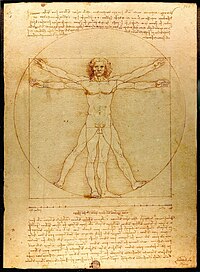 |
| The Vitruvian Man by Leonardo da Vinci |
These works of art and design by da Vinci are realistic in nature and pleasing to the eye in a gentle, beautiful way. Unlike the works of Van Gogh and Picasso, da Vinci drew for the seers eye, not his own. This does not mean he was a bad artist, just a thoughtful one.
Even though we are long and far past this I want to explain 'good' vs 'bad' aesthetics...‘Bad’ aesthetics does not necessarily mean something is bad,
but rather not pleasing in appearance. I told you earlier that Aesthetics meant
pleasing in appearance. Though in
contrast, aesthetics can be pleasant looking or, it can be appalling; raw or
not professional. In a sense when I say aesthetics I mean that it is truthful
and creates a certain wonderment or feel surrounding it, so in essence when I
say ‘bad’ or ‘good’ both can create this feeling but they affect different
audiences differently. Something can be perfect and jaw dropping and it can have very good aesthetics, but it can also be so horrendous and raw that one
gasps and is speechless for fear.
Through this bafflement towards an image, we can call it art. In
Humanities we came up with a succinct definition of what we believed art was or
consisted of. Through John Berger while we read The White Bird we learned that to him, art was a form of prayer. But it is not only that, it is a creation a want for something more.
It is HOPE.
Arigato!
-There is a struggle, violence, bleakness in the world. Artists trying to freeze the aesthetic moment when we confront beauty. Hoping to make the aesthetic moment permanent.-
By Period 3 Humanities Class
We got to this conclusion through a discussion that lasted for the entire 50 minutes of our class, and what it means is that (if you would so kindly read The White Bird by John Berger) within nature is the good and evil that this world possesses. So through all the horribleness of nature, beauty is the only good and when beauty is seen the Artist wants to recreate that moment of awe, the awareness that awakened them to the wonders of the world. The Artist wants that moment to be seen by all, thus making it a permanent beauty.
Going back to that moment of awe we can assume that to create that bafflement the artist uses aesthetics to wonder the audience. Through aesthetics, the design, the artist can recreate the beautiful, tragic or jaw dropping moment.
So I guess you could say that the purpose of Artists is to create art that wonders the world, and the purpose of art is to permanently freeze a sight or space of time to show the people the wonders of the world, and the purpose of aesthetics is to give good in all the evil of the world.
Arigato!
Now, as per usual:

Aren't the aesthetics of this picture amazing?
(Good vs. Evil, can you tell which is which?)